
 |
[Last Modified: ] |
 |
|
| [Baylisascaris procyonis] |
 |
 |
 |
 |
 |
 |
|
Causal Agent:
Human
baylisascariasis
is caused by larvae of Baylisascaris procyonis, an
intestinal nematode of raccoons.
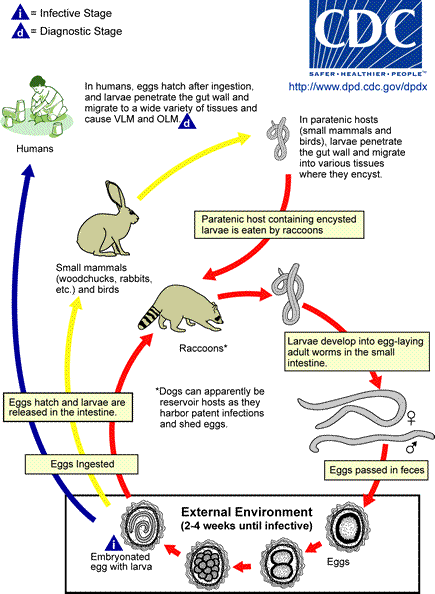
Baylisascaris procyonis completes its life cycle in raccoons (Procyon lotor), with humans acquiring the infection as accidental hosts. Following ingestion by many different hosts (over 50 species of birds and mammals, especially rodents, have been identified as intermediate hosts) eggs hatch and larvae penetrate the gut wall and migrate into various tissues, where they encyst. The life cycle is completed when raccoons eat these hosts. The larvae develop into egg-laying adult worms in the small intestine and eggs are eliminated in raccoon feces. People become accidentally infected when they ingest infective eggs from the environment; typically this occurs in young children playing in the dirt. After ingestion, the eggs hatch and larvae penetrate the gut wall and migrate to a wide variety of tissues (liver, heart, lungs, brain, eyes), and cause visceral (VLM) and ocular (OLM) larva migrans syndromes, similar to toxocariasis. In contrast to Toxocara larvae, Baylisascaris larvae continue to grow during their time in the human host. Tissue damage and the signs and symptoms of baylisascariasis are often severe because of the size of Baylisascaris larvae, their tendency to wander widely, and the fact that they do not readily die.
Geographic
Distribution:
Raccoons infected
with Baylisascaris
procyonis appear to be common in the Middle Atlantic, Midwest, and
Northeast regions of the United States and are well documented in
California and Georgia. Proven human cases have been reported in
California, Oregon, New York, Pennsylvania, Illinois, Michigan, and
Minnesota, with a suspected case in Missouri.
|
||||||||
|
||||||||
|
||||||||
|
||||||||
|


