
 |
[Last Modified: ] |
 |
|
| [Fasciolopsis buski] |
 |
 |
 |
 |
 |
 |
|
Causal Agent:
The trematode Fasciolopsis
buski, the largest intestinal fluke of humans.
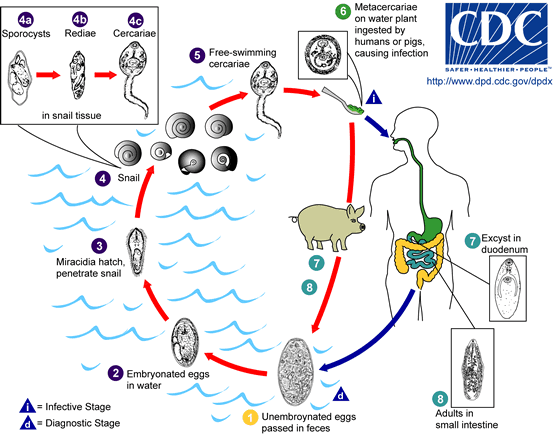
Immature eggs
are discharged into the intestine and stool
 .
Eggs become embryonated in water
.
Eggs become embryonated in water
 ,
eggs release miracidia
,
eggs release miracidia
 ,
which invade a suitable snail intermediate host
,
which invade a suitable snail intermediate host
 . In the snail the
parasites undergo several developmental stages (sporocysts
. In the snail the
parasites undergo several developmental stages (sporocysts
 ,
rediae
,
rediae
 , and
cercariae
, and
cercariae
 ). The cercariae are released from the snail
 and encyst as metacercariae on aquatic
plants
and encyst as metacercariae on aquatic
plants
 . The mammalian hosts become infected by ingesting metacercariae on the
aquatic plants. After ingestion, the metacercariae excyst in the duodenum
. The mammalian hosts become infected by ingesting metacercariae on the
aquatic plants. After ingestion, the metacercariae excyst in the duodenum
 and attach
to the intestinal wall. There they develop into adult flukes (20
to 75
mm by 8 to 20 mm) in approximately 3 months, attached to the intestinal wall
of the mammalian hosts (humans and pigs)
and attach
to the intestinal wall. There they develop into adult flukes (20
to 75
mm by 8 to 20 mm) in approximately 3 months, attached to the intestinal wall
of the mammalian hosts (humans and pigs)
 .
The adults have a life span of
about one year.
.
The adults have a life span of
about one year.
Geographic
Distribution:
Asia and the Indian
subcontinent, especially in areas where humans raise pigs and consume freshwater plants.
|
||||||||
|
||||||||
|
||||||||
|
||||||||
|


