
 |
[Last Modified: ] |
 |
|
| [Metagonimus yokogawai] |
 |
 |
 |
 |
 |
 |
|
Causal Agent:
Metagonimus yokogawai, a
minute intestinal fluke (and the smallest human fluke).
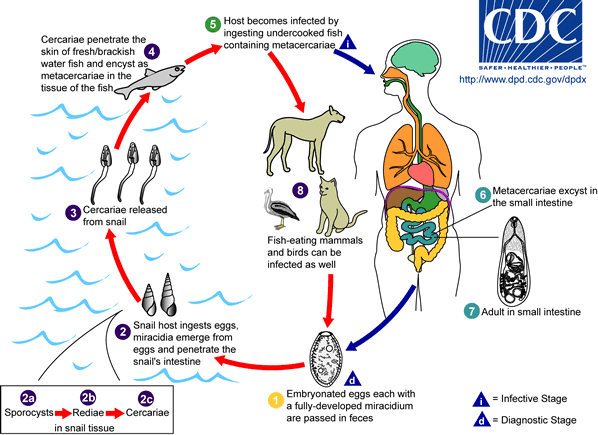
Adults release
fully embryonated eggs each with a fully-developed miracidium, and eggs are passed in the host’s feces
 .
After ingestion by a suitable snail (first intermediate host),
the eggs hatch and release miracidia which penetrate the snail’s intestine
.
After ingestion by a suitable snail (first intermediate host),
the eggs hatch and release miracidia which penetrate the snail’s intestine
 .
Snails of the genus Semisulcospira are the most frequent intermediate host
for Metagonimus yokogawai. The miracidia undergo several developmental
stages in the snail, i.e. sporocysts
.
Snails of the genus Semisulcospira are the most frequent intermediate host
for Metagonimus yokogawai. The miracidia undergo several developmental
stages in the snail, i.e. sporocysts
 , rediae
 ,
and cercariae
,
and cercariae
 . Many cercariae are produced from each redia.
The cercariae are released from the snail
. Many cercariae are produced from each redia.
The cercariae are released from the snail
 and encyst as metacercariae in the
tissues of a suitable fresh/brackish water fish (second intermediate host)
and encyst as metacercariae in the
tissues of a suitable fresh/brackish water fish (second intermediate host)
 .
The definitive host becomes infected by ingesting undercooked or salted fish containing metacercariae
.
The definitive host becomes infected by ingesting undercooked or salted fish containing metacercariae
 .
After ingestion, the metacercariae excyst, attach to the mucosa of the small
intestine
.
After ingestion, the metacercariae excyst, attach to the mucosa of the small
intestine
 and mature into adults (measuring 1.0 mm to 2.5 mm by 0.4 mm to 0.75 mm)
 . In addition to humans, fish-eating mammals
(e.g., cats and dogs) and birds can also be infected by
M. yokogawai
. In addition to humans, fish-eating mammals
(e.g., cats and dogs) and birds can also be infected by
M. yokogawai
 .
.
Geographic
Distribution:
Mostly the Far East, as well as
Siberia, Manchuria, the Balkan states, Israel, and Spain.
|
||||||||
|
||||||||
|
||||||||
|
||||||||
|


