
 |
[Last Modified: ] |
 |
|
| [Trichinella
spiralis] [T. pseudospiralis] [T. nativa] [T. nelsoni] [T. britovi] |
 |
 |
 |
 |
 |
 |
|
Causal Agents:
Trichinellosis
(trichinosis) is caused by
nematodes (roundworms) of the genus Trichinella. In addition to the classical
agent T. spiralis (found worldwide in many carnivorous and omnivorous animals),
four other species of Trichinella are now recognized: T. pseudospiralis (mammals
and birds worldwide), T. nativa (Arctic bears), T. nelsoni (African
predators and scavengers), and T. britovi (carnivores of Europe and western Asia).
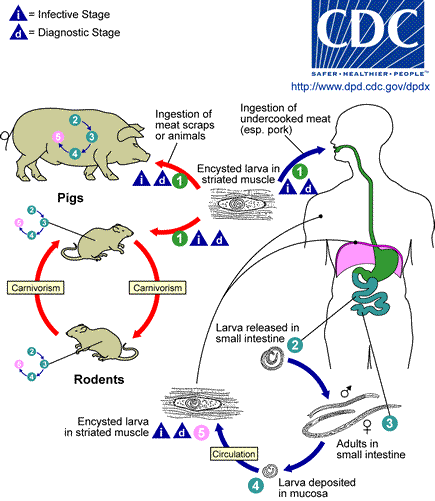
Trichinellosis is acquired
by ingesting meat containing cysts (encysted larvae)
 of Trichinella. After exposure to gastric acid and pepsin,
the larvae are released
of Trichinella. After exposure to gastric acid and pepsin,
the larvae are released
 from the cysts and invade the small bowel mucosa where they develop into
adult worms
from the cysts and invade the small bowel mucosa where they develop into
adult worms
 (female 2.2 mm in length, males 1.2 mm; life span in the small bowel: 4
weeks). After 1 week, the females release larvae
(female 2.2 mm in length, males 1.2 mm; life span in the small bowel: 4
weeks). After 1 week, the females release larvae
 that migrate to the striated muscles where they encyst
 .
Trichinella pseudospiralis, however, does not encyst. Encystment
is completed in 4 to 5 weeks and the encysted larvae may remain viable for
several years. Ingestion of the encysted larvae perpetuates the cycle.
Rats and rodents are primarily responsible for maintaining the endemicity
of this infection. Carnivorous/omnivorous animals, such as pigs or
bears, feed on infected rodents or meat from other animals. Different
animal hosts are implicated in the life cycle of the different species of
Trichinella. Humans are accidentally infected when eating improperly
processed meat of these carnivorous animals (or eating food contaminated
with such meat).
.
Trichinella pseudospiralis, however, does not encyst. Encystment
is completed in 4 to 5 weeks and the encysted larvae may remain viable for
several years. Ingestion of the encysted larvae perpetuates the cycle.
Rats and rodents are primarily responsible for maintaining the endemicity
of this infection. Carnivorous/omnivorous animals, such as pigs or
bears, feed on infected rodents or meat from other animals. Different
animal hosts are implicated in the life cycle of the different species of
Trichinella. Humans are accidentally infected when eating improperly
processed meat of these carnivorous animals (or eating food contaminated
with such meat).
Geographic
Distribution:
Worldwide. Most common
in parts of Europe and the United States.
|
||||||||
|
||||||||
|
||||||||
|
||||||||
|


