|
 |
[Last Modified: ] |
 |
|
| [Clonorchis
sinensis] |
|
|
|
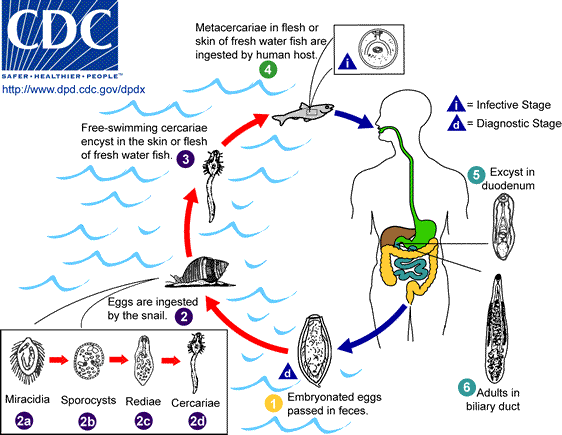 |
Embryonated eggs are discharged in the biliary ducts and
in the stool
 .
Eggs are ingested by a suitable snail intermediate host .
Eggs are ingested by a suitable snail intermediate host
 ; there are more than 100 species of
snails that can serve as intermediate hosts. Each egg releases a
miracidia ; there are more than 100 species of
snails that can serve as intermediate hosts. Each egg releases a
miracidia
 , which go through several developmental
stages (sporocysts , which go through several developmental
stages (sporocysts
 ,
rediae ,
rediae
 , and
cercariae , and
cercariae
 ). The cercariae are released from the snail and after a short
period of free-swimming time in water, they come in contact and penetrate the flesh of freshwater fish, where they
encyst as metacercariae ). The cercariae are released from the snail and after a short
period of free-swimming time in water, they come in contact and penetrate the flesh of freshwater fish, where they
encyst as metacercariae
 . Infection of humans occurs by ingestion of undercooked, salted, pickled, or smoked
freshwater fish . Infection of humans occurs by ingestion of undercooked, salted, pickled, or smoked
freshwater fish
 . After ingestion, the metacercariae excyst in the duodenum . After ingestion, the metacercariae excyst in the duodenum
 and ascend the biliary tract
through the ampulla of Vater
and ascend the biliary tract
through the ampulla of Vater
 . Maturation takes approximately 1 month. The adult flukes (measuring 10 to 25 mm
by 3 to 5 mm) reside in small and medium sized biliary ducts. In addition to humans, carnivorous animals can
serve as reservoir hosts. . Maturation takes approximately 1 month. The adult flukes (measuring 10 to 25 mm
by 3 to 5 mm) reside in small and medium sized biliary ducts. In addition to humans, carnivorous animals can
serve as reservoir hosts.
|
|


