|
 |
[Last Modified: ] |
 |
|
| [Toxocara
canis] [T. cati] |
|
|
|
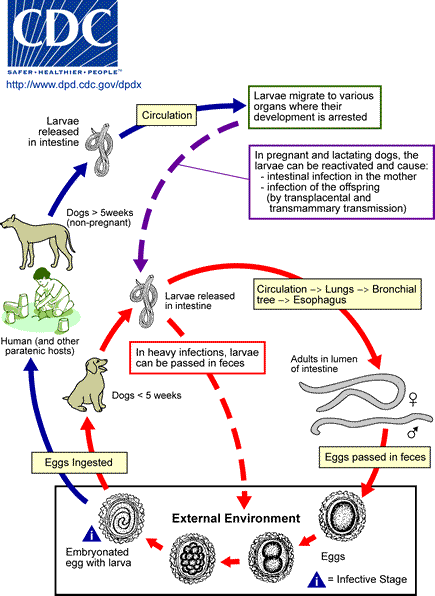 |
Toxocara canis
accomplishes its life cycle in dogs, with humans acquiring the infection as accidental
hosts. Following ingestion by dogs, the infective eggs yield larvae that penetrate
the gut wall and migrate into various tissues, where they encyst if the dog is older than
5 weeks. In younger dogs, the larvae migrate through the lungs, bronchial tree, and
esophagus; adult worms develop and oviposit in the small intestine. In the older
dogs, the encysted stages are reactivated during pregnancy, and infect by the
transplacental and transmammary routes the puppies, in whose small intestine adult worms
become established. Thus, infective eggs are excreted by lactating bitches and
puppies. Humans are paratenic hosts who become infected by ingesting infective eggs
in contaminated soil. After ingestion, the eggs yield larvae that penetrate the
intestinal wall and are carried by the circulation to a wide variety of tissues (liver,
heart, lungs, brain, muscle, eyes). While the larvae do not undergo any further
development in these sites, they can cause severe local reactions that are the basis of
toxocariasis.
|
|


